Cold emails are an essential tool for reaching out to potential clients, businesses, or individuals who may have an interest in your product or service. However, crafting cold emails that actually receive responses can be a challenging task. Too often, cold emails end up in the recipient’s spam folder, never to be seen or responded to.
In this article, we will explore effective strategies and tips for writing cold emails that not only grab the attention of the recipient but also avoid being marked as spam. By implementing these techniques, you can significantly increase the chances of receiving responses and building meaningful connections with your target audience.
Whether you are a seasoned marketer or just getting started with cold email outreach, this article will provide you with valuable insights and practical advice on how to write compelling cold emails that stand out in crowded inboxes and generate favorable responses.
So, if you are ready to master the art of writing cold emails that get responses and avoid being marked as spam, let’s dive in and discover the key strategies for success.
Introduction
In the world of email outreach and marketing, cold emails play a crucial role in expanding your network, generating leads, and driving business growth. Crafting effective cold emails is essential for grabbing the attention of recipients and increasing the chances of eliciting a positive response. In this article, we will explore strategies and tips for writing compelling cold emails that not only get noticed but also avoid being marked as spam.
Definition of Cold Emails
Cold emails refer to unsolicited emails sent to individuals who have no prior engagement or relationship with the sender. Unlike warm or hot emails, which are sent to recipients who have shown interest or provided consent, cold emails are intended to initiate contact and establish connections with potential clients, partners, or prospects.
Importance of Crafting Effective Cold Emails
The significance of crafting effective cold emails cannot be overstated. In a highly competitive digital landscape, where inboxes are flooded with numerous emails, it is crucial to stand out from the crowd and make a lasting impression. Well-crafted cold emails have the power to capture the recipient’s attention, spark curiosity, and inspire them to take the desired action, resulting in valuable opportunities and business growth.
Purpose of the Article
The purpose of this article is to provide valuable insights and practical tips for writing cold emails that deliver results. Whether you are a seasoned professional or just starting with email outreach, these strategies will help you optimize your efforts and maximize the effectiveness of your cold email campaigns. By implementing the techniques discussed here, you will be able to craft compelling and persuasive emails that generate responses and steer clear of being marked as spam.
Understanding the Recipient
When it comes to writing successful cold emails, understanding the recipient is crucial. Taking the time to research the target audience can provide valuable insights into their preferences, challenges, and needs. By gaining this understanding, you can tailor your email message accordingly to resonate with them and increase the chances of a positive response.
Researching the Target Audience
Researching the target audience involves gathering information about their demographics, professional backgrounds, and interests. This can be done through various methods, such as analyzing customer data, conducting surveys, or utilizing market research tools. By understanding who your recipients are and what they care about, you can craft a more targeted and personalized email.
Identifying Pain Points and Needs
An important aspect of understanding the recipient is identifying their pain points and needs. What challenges do they face? What problems are they trying to solve? By empathizing with their struggles, you can position your product or service as a solution. Addressing these pain points directly in your email shows that you’ve taken the time to understand their specific needs, making your message more compelling and relevant.
Tailoring the Message Accordingly
Once you have a clear understanding of your recipient and their pain points, it’s time to tailor your email message accordingly. Personalize your email by using their name and addressing their specific needs or challenges. Make sure that the content of your email speaks directly to them and offers a solution that aligns with their goals. This level of personalization and relevance will make your cold email stand out and increase the likelihood of a positive response.
Crafting Compelling Subject Lines
Importance of subject lines in grabbing attention
The subject line is the first thing that recipients see when they receive a cold email. It plays a crucial role in grabbing their attention and enticing them to open the email. A well-crafted subject line can make the difference between your email being opened or sent straight to the spam folder.
Keeping subject lines concise and relevant
When crafting subject lines for cold emails, it’s important to keep them concise and to the point. Long, wordy subject lines are more likely to be ignored or misunderstood. Aim to communicate the main purpose or benefit of the email in a clear and concise manner. Short subject lines are also more likely to be fully displayed on mobile devices, increasing the chances of engagement.
A/B testing subject lines for effectiveness
A/B testing is a valuable technique for optimizing the effectiveness of cold email subject lines. By creating two or more versions of the subject line and testing them on subsets of your email list, you can gather data on which subject lines perform best. This data-driven approach helps you understand what resonates with your audience and allows you to refine your subject lines for maximum impact.
| Benefits of A/B testing subject lines | Best practices for A/B testing |
|---|---|
| Optimize email open rates Increase engagement and response rates Improve overall email campaign performance | Test only one variable at a time Ensure a large enough sample size for statistically significant results Track and analyze performance metrics accurately |
Personalizing the Email
Personalizing cold emails is essential to create a connection with the recipient and increase the chances of a response. By adding a personal touch to the email, such as using the recipient’s name and including relevant details, you can make the email more engaging and relevant to their needs.
Using recipient’s name and relevant details
When crafting a cold email, it’s important to address the recipient by their name. Using their name shows that you have taken the time to research and personalize the email specifically for them. Additionally, including relevant details in the email, such as their company name or industry, can further demonstrate that the email is tailored to their specific situation.
Referencing previous interactions or connections
If you have had any previous interactions with the recipient, such as meeting at a networking event or connecting on social media, it’s beneficial to reference those interactions in the email. This helps establish a personal connection and shows that you have a genuine interest in building a relationship.
Avoiding generic templates
Avoid using generic email templates that lack personalization. Generic templates can come across as impersonal and spammy, decreasing the likelihood of a response. Instead, take the time to craft a unique and personalized email that addresses the recipient’s specific needs and pain points. This demonstrates that you have put thought and effort into reaching out to them.
| Benefits of Personalizing Cold Emails | Avoidance of Generic Templates | Techniques for Personalizing Cold Emails |
|---|---|---|
| ? Increases engagement and response rates | ? Enhances email credibility | ? Use recipient’s name |
| ? Builds rapport and trust with the recipient | ? Demonstrates personalized effort | ? Include relevant details |
| ? Increases the likelihood of a positive outcome | ? Avoids coming across as spammy | ? Reference previous interactions |
Providing Value
The success of a cold email campaign hinges on the ability to provide value to the recipient. By offering solutions to the recipient’s problems or challenges, you can demonstrate how your product or service can address their needs. This approach not only grabs their attention but also positions you as a valuable resource they can rely on.
Highlighting the benefits of your product or service is another crucial aspect of providing value. Clearly communicate the unique features and advantages that set you apart from the competition. Explain how your solution can improve their productivity, save them time or money, or help them achieve their goals. By emphasizing these benefits, you can effectively convey the value proposition of your offering.
In addition to solutions and benefits, including relevant content or resources in your cold email can further enhance its value. This could include links to blog posts, whitepapers, case studies, or other resources that provide valuable information or insights. By sharing educational or informative content, you position yourself as an industry expert and build credibility with the recipient.
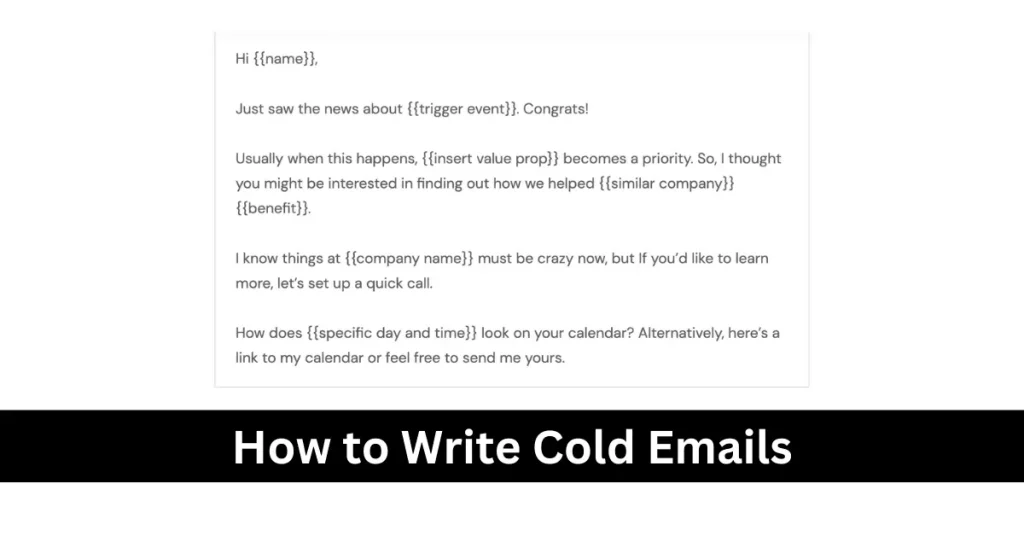
Here’s an example of how you can structure a cold email to provide value:
| Section | Content |
|---|---|
| Introduction | Greet the recipient and establish a connection. |
| Problem Identification | Highlight a specific challenge or pain point they might be experiencing. |
| Solution | Present your product or service as a solution to their problem, explaining how it can address their specific needs. |
| Benefits | Clearly outline the benefits and advantages of choosing your solution over others. This could include quantifiable results, cost savings, or time efficiency. |
| Value-added Resources | Share links to relevant content, such as blog posts, case studies, or videos, that provide additional value and insights related to the recipient’s challenges. |
| Call-to-Action | Provide a clear and compelling call-to-action that prompts the recipient to take the desired next step, such as scheduling a call or requesting a demo. |
| Closing | Thank the recipient for their time and express your willingness to answer any further questions or provide additional information. |
By following this structure and providing value throughout your cold email, you increase the likelihood of generating a positive response and starting a meaningful conversation with the recipient. Remember, the key is to focus on their needs and how you can help solve their problems.
Writing Clear and Concise Content
In order to increase the effectiveness of cold emails, it is crucial to write clear and concise content that gets straight to the point. Here are some key strategies to ensure your message is focused, easy to understand, and compelling:
Keeping the message focused and to the point
Avoid overwhelming recipients with lengthy emails. Keep your message concise and focused on the main objective. Use short paragraphs and bullet points to break up the text and make it easier to read. This will help grab the recipient’s attention and keep them engaged throughout the email.
Using simple language and avoiding jargon
When writing cold emails, it is important to use simple and straightforward language. Avoid technical jargon or industry-specific terms that the recipient may not understand. Use everyday language that is accessible to a wide range of readers. This will ensure that your message is easily comprehensible and does not create confusion.
Including a clear call-to-action (CTA)
Every cold email should include a clear and compelling call-to-action. Clearly state what you want the recipient to do, whether it’s scheduling a call, downloading a resource, or making a purchase. Use action-oriented language and provide all the necessary information to make it easy for the recipient to take the desired action.
| Key Strategies for Writing Clear and Concise Content |
|---|
| Keep the message focused and to the point |
| Use simple language and avoid jargon |
| Include a clear call-to-action (CTA) |
Building Credibility
Building credibility is essential when it comes to crafting effective cold emails that generate responses. Establishing trust with the recipient is crucial in order to increase the chances of a positive response. There are several strategies that can help build credibility in cold emails:
Providing Social Proof or Testimonials
One effective way to build credibility is by providing social proof or testimonials from satisfied customers. Including positive feedback or endorsements from individuals or reputable sources can demonstrate the value and credibility of the product or service being offered. This helps the recipient feel more confident in considering the email and the offer.
Mentioning Relevant Achievements or Credentials
Another strategy is to mention relevant achievements or credentials that showcase expertise or success in the field. This could include awards, certifications, or notable accomplishments that demonstrate a track record of delivering results. By highlighting these achievements, the sender can establish themselves as a credible and reputable source.
Establishing Trust Through Sincerity and Transparency
Sincerity and transparency are key elements in building trust with the recipient. Cold emails should be sincere in their intentions and transparent about the purpose of the email and the offer being presented. Being open and honest helps create a sense of trust, fostering a more positive and receptive response from the recipient.
| Methods | Examples |
|---|---|
| Providing social proof or testimonials | -“As a trusted organization, our product has helped thousands of satisfied customers achieve their goals. Here’s what some of them have to say:” |
| Mentioning relevant achievements or credentials | -“With over 10 years of experience in the industry, our team has successfully completed projects for leading companies such as ABC Inc. and XYZ Corp.” |
| Establishing trust through sincerity and transparency | -“We believe in delivering value to our customers and want to provide you with an opportunity to benefit from our product. Our goal is to help you achieve success.” |
By implementing these strategies, cold email senders can effectively build credibility and increase the likelihood of receiving positive responses from recipients. Building trust and demonstrating credibility are key factors in creating successful cold email campaigns.
Avoiding Spam Triggers
In order to ensure that cold emails don’t get marked as spam, it’s important to understand spam filters and algorithms. By familiarizing yourself with the strategies employed by these systems, you can take steps to avoid triggering them and increase the chances of your emails reaching the intended recipients.
Understanding spam filters and algorithms
Spam filters and algorithms are designed to identify and block unsolicited or suspicious emails. They analyze various factors such as content, sender reputation, and user behavior to determine whether an email is legitimate or spam. By understanding how these systems work, you can minimize the risk of your emails being flagged and improve deliverability.
Steering clear of spammy language and tactics
Using spammy language or tactics in your cold emails can raise red flags and increase the chances of them being marked as spam. Avoid using excessive capitalization, unnecessary punctuation, and misleading subject lines. Instead, focus on writing genuine, concise, and professional content that adds value to the recipient.
Properly formatting the email
The formatting of your email can also play a role in avoiding spam triggers. Make sure to use a clean and well-organized layout that is easy to read. Avoid using overly complex HTML coding or embedding large files or images. By adhering to proper email formatting practices, you can enhance deliverability and avoid spam detection.
| Common Spam Triggers | How to Avoid Them |
|---|---|
| Excessive use of exclamation marks or capital letters | Use proper punctuation and capitalization sparingly |
| Using deceptive subject lines or irrelevant content | Ensure your subject lines accurately reflect the email content and adhere to relevant regulations |
| Adding too many hyperlinks or attachments | Minimize the use of hyperlinks and attachments, only include those that are relevant and necessary |
| Using words commonly associated with spam | Avoid using words often flagged as spam, such as “free,” “buy now,” or “limited time offer” |
By being mindful of spam triggers, you can improve the deliverability and effectiveness of your cold emails. Take the time to understand spam filters and algorithms, avoid spammy language and tactics, and ensure proper email formatting. By doing so, you can increase the chances of your emails reaching the recipients’ inbox and generating the desired response.
Testing and Iterating
In order to ensure the effectiveness of cold email strategies, it is crucial to continuously test and iterate. By monitoring email performance metrics, collecting feedback and insights, and making adjustments based on results, you can optimize your cold email campaigns for better outcomes.
Monitoring Email Performance Metrics
Tracking email performance metrics is essential for evaluating the success of your cold email campaign. Key metrics to monitor include open rates, click-through rates, response rates, and conversion rates. By analyzing these metrics, you can identify areas of improvement and make data-driven decisions to enhance your email strategy.
Collecting Feedback and Insights
Collecting feedback from recipients is a valuable source of information that can help you refine your cold email approach. Encourage recipients to provide their thoughts, opinions, and suggestions, allowing you to gain insights into what resonates with your target audience and what doesn’t. This feedback can guide you in making necessary adjustments and improvements.
Making Adjustments Based on Results
Based on the data, feedback, and insights gathered, it is important to make adjustments to your cold email strategy. Analyze what is working well and what needs improvement, and then refine your email content, subject lines, personalization, or any other relevant aspect. By iteratively optimizing your approach, you can increase the effectiveness of your cold emails and achieve better results.
Related:
- The Ultimate Guide to Cold Email Software
- Instantly.ai Pricing
- Instantly.ai Alternatives
- Instantly.ai Review
Conclusion
In conclusion, writing cold emails that get responses and avoid being marked as spam requires a strategic approach. By summarizing the key points discussed in this article, readers can gain valuable insights into crafting effective cold emails.
Experimentation and persistence are crucial factors in the success of cold email campaigns. By trying out different approaches and techniques, individuals can discover what works best for their target audience. It is important to stay persistent in their efforts, as building relationships through cold emails can take time and consistency.
Adaptability is another key aspect to keep in mind. It is essential to make adjustments based on the feedback received and the results obtained. By monitoring email performance metrics and collecting feedback from recipients, individuals can make informed decisions and improve their cold email strategies.
By implementing the strategies discussed in this article, readers can increase their chances of writing cold emails that generate responses and avoid being marked as spam. Remember, personalization, providing value, and writing clear and concise content are essential elements to keep in mind when crafting compelling cold emails. So, experiment, be persistent, and stay adaptable to achieve success in your cold email outreach efforts.